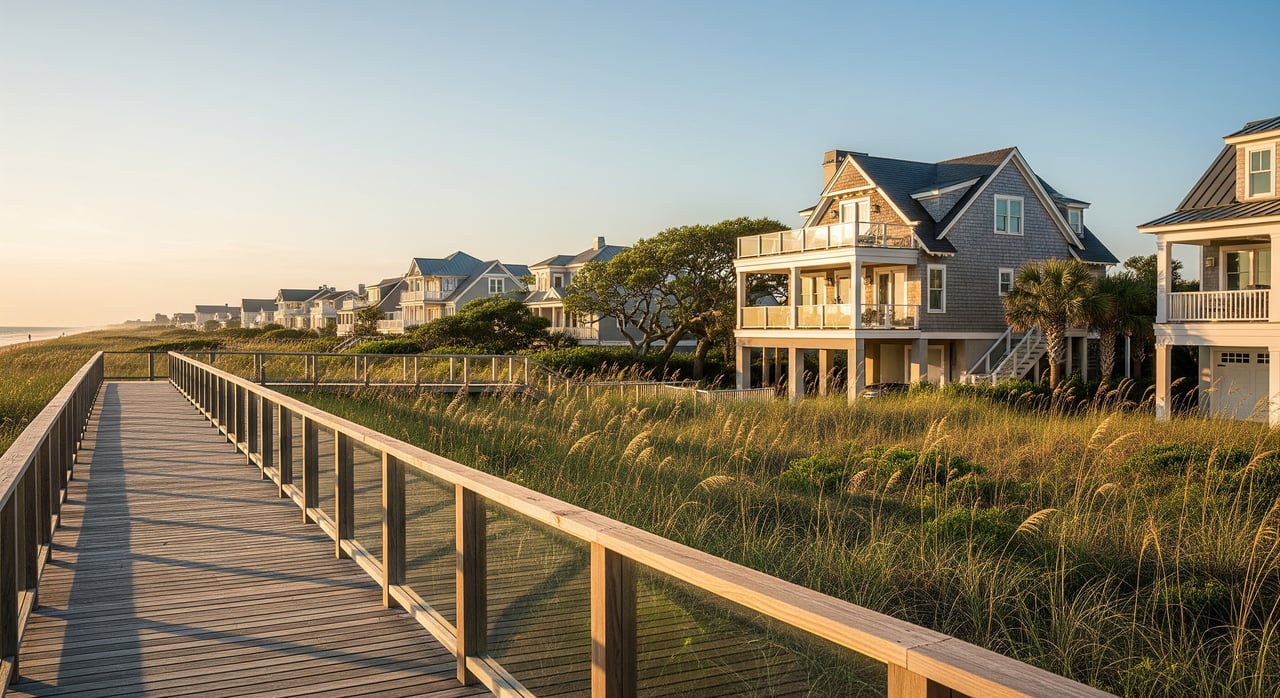
Comparing POAs and HOAs while shopping for a place in Surf City? You want easy beach days, simple rules, and no surprises when a storm rolls through. In this guide, you will learn how POAs and HOAs work in coastal North Carolina, what dues usually cover, and how rules can shape beach access, amenities, short-term rentals, and boat storage. You will also get a clear checklist to use before you make an offer. Let’s dive in.
POA vs HOA in North Carolina
The labels “POA” and “HOA” often describe the same type of private association. In North Carolina, the real difference comes from each community’s recorded Declaration, bylaws, and rules. Many subdivisions fall under the North Carolina Planned Community Act, while condos follow the North Carolina Condominium Act. You can review those laws in the North Carolina Planned Community Act and the North Carolina Condominium Act.
Many associations are organized as nonprofit corporations. You can look up filings and basic details through the NC Secretary of State. Enforcement powers and assessments come from both the recorded covenants and state law, so always read the specific documents for the property you are considering.
What matters most: the documents
The governing documents tell you what the association can do, what you must pay, and how rules are enforced. Focus your review on the Declaration/CC&Rs, bylaws, rules and architectural guidelines, and any amendments. The recorded plat and easements also show where common areas, access paths, and parking are located.
Membership and assessments
In most planned communities and condos, membership and dues are mandatory because the Declaration is recorded against each lot or unit. Some POAs tied only to optional amenities can be voluntary, but that depends on how the facilities are owned and how the covenants are recorded. The only way to know is to check the property’s title and the association’s documents.
How Surf City associations operate
Associations are typically run by a volunteer board elected by owners. Many neighborhoods pass through a developer-control period until a set number of lots are sold or a date set in the documents. This affects how rules evolve and how budgets are set in the early years.
Common duties include:
- Maintaining common areas, signage, lighting, access paths, and landscaping
- Operating amenities like pools, private beach accesses, clubhouses, piers, ramps, and parking
- Coordinating storm cleanup and emergency repairs to shared infrastructure
- Carrying insurance for common property and liability
- Enforcing covenants, including architectural review and usage rules
- Managing budgets, contracts, and reserves
For a helpful overview of typical association roles and reserve planning, see Community Associations Institute guidance.
What dues cover near the beach
Dues fund routine operations and future repairs. In coastal communities, you will often see these line items:
- Routine maintenance for common areas, mowing, path cleaning, and trash pickup
- Utilities for lighting, irrigation, pools, and restrooms
- Amenity operations, security, and management company fees
- Insurance for common structures, general liability, and directors and officers
- Professional services like legal and accounting
- Reserve contributions for big-ticket replacements such as bulkheads, piers, boardwalks, roofs, and decking
- Regulatory permits and stormwater maintenance, plus post-storm cleanup and emergency fixes
Why coastal dues run higher
- Salt, wind, and humidity shorten the life of decks, rails, and metals
- Storm preparation and debris removal add recurring costs
- Dune crossovers, boardwalks, and shoreline permits require ongoing maintenance and compliance
- Piers, docks, and ramps increase maintenance and liability exposure
- Flood and wind insurance premiums are often higher in coastal zones
Typical cost ranges
Monthly dues vary by size, amenities, and reserve strength. Basic single-family neighborhoods with minimal amenities are often under $100 per month. Communities with pools, private beach access, parking, or staffed services can run a few hundred dollars per month. Marina or high-amenity communities can reach $300 to $800 or more. Small associations without strong reserves are more likely to levy special assessments after major storms.
Beach access rules you will see
In North Carolina, the wet-sand area seaward of the mean high water line is generally available for public use, while dry sand and upland areas can be private. Associations often own private dune crossovers, paths, and parking and can set rules for those facilities. Learn more about beach and dune management from the NC Division of Coastal Management.
In practice, “private beach access” usually means the community controls the path, crossover, and parking for members. It does not always mean exclusive use of the wet-sand area. If you want to compare private access to public options, check the Town of Surf City for municipal public access points.
Amenities, boats, and parking
Associations set rules for amenity hours, guest use, and safety requirements. If a community owns a pier or marina, slip rights and launch access may involve separate agreements, waitlists, and additional fees. Coastal structures must meet permit conditions, which can affect how and when they are used.
Boat and trailer storage is often restricted. Some neighborhoods offer a secured lot or tagged spaces for an extra fee. Others prohibit long-term storage on driveways or streets. Size limits, registration rules, and parking policies vary, so get the current rules in writing. For permit and property details, consult Pender County and the NC Division of Coastal Management.
Short-term rentals and second homes
Many coastal communities set leasing rules to balance owner use, guest access, and wear on amenities. You might see minimum stay requirements, rental caps, registration steps, or higher amenity fees for rentals. Some communities allow short-term rentals with conditions, while others restrict them. If rental income is part of your plan, check the leasing rules before you write an offer.
Due diligence and budgeting checklist
Use this checklist to compare Surf City communities with confidence:
- Documents to review: Declaration/CC&Rs and amendments, bylaws, rules and architectural guidelines, recorded plat and easements
- Financials: current operating budget, recent financial statements, bank balances, and any reserve study with a capital replacement schedule
- Insurance: association master policies and declarations pages, including wind and flood coverage and deductibles
- Governance: board and annual meeting minutes from the last year, plus any litigation disclosures
- Assessments: current dues, special assessments, and any pending or planned assessments; request an estoppel or payoff statement before closing
- Amenities and boats: policies for guest use, parking, boat and trailer storage, slip assignment, and related fees or waitlists
- Coastal structures: copies of permits and maintenance agreements for dunes, crossovers, bulkheads, and piers
- Key questions: planned capital projects, condition and age of major common elements, recent emergency repairs, reserve funding level, and insurance claim history
- Budget planning: allow for volatility, since post-storm cleanup and uninsured losses can lead to special assessments
- Risk checks: review flood zones at the FEMA Flood Map Service Center; use NOAA coastal data for context on storm and tide exposure
For general guidance on association operations and reserves, the Community Associations Institute is a useful resource. You can also confirm an association’s corporate status through the NC Secretary of State.
Local resources for Surf City buyers
- Town facilities and beach access: Town of Surf City
- Permitting and property records: Pender County
- Beach and dune guidance, permits: NC Division of Coastal Management
- Flood maps and panels: FEMA Flood Map Service Center
- Coastal hazards and sea-level tools: NOAA coastal data
- Association best practices and reserves: Community Associations Institute
- Corporation filings and records: NC Secretary of State
Work with a local advocate
Choosing between POA and HOA communities in Surf City comes down to the details. A clear review of the documents, fees, rules, and risk profile will help you find the right fit for your lifestyle and budget. If you want a local, concierge approach to second-home buying on Topsail Island and the mainland, connect with Joseph Zuba to schedule a free consultation. You will get neighborhood insight, thoughtful comparisons, and a guided path from search to close.
FAQs
What is the difference between a POA and an HOA in North Carolina?
- The labels are similar; the real differences come from each community’s Declaration, bylaws, and rules under the Planned Community Act or the Condominium Act.
What does “private beach access” usually mean in Surf City?
- It typically means the association owns the access path, crossover, and parking for members, not exclusive rights to the wet-sand beach area managed under public trust principles.
How much are HOA or POA dues near the beach?
- Basic neighborhoods can be under $100 per month, while communities with pools, beach parking, or marinas often range from a few hundred to $300–$800 or more depending on amenities and reserves.
Are boats and trailers allowed in Surf City communities?
- Rules vary; many communities limit driveway storage and use a secured lot or registration system, and some have separate fees or waitlists for docks or ramps.
Can I rent my home short term in a Surf City HOA or POA?
- It depends on the recorded rules; you may see minimum stays, registration, or caps, and some communities restrict short-term rentals entirely.
What should I review before buying in a coastal association?
- Ask for the Declaration, bylaws, rules, budget, financials, reserve study, insurance declarations, meeting minutes, assessment history, and permits for coastal structures, and verify flood zones with FEMA.