Wondering whether HOA or POA living in Topsail Beach is a smart fit for your coastal goals? That question matters more here than it might inland, because life on a barrier island comes with a mix of private community rules and town regulations that shape how you use and enjoy your property. If you are comparing neighborhoods, this guide will help you understand what association living really means in Topsail Beach, what to review before you buy, and how to weigh convenience against flexibility. Let’s dive in.
HOA and POA living in Topsail Beach
In Topsail Beach, buyers often hear the terms HOA and POA used interchangeably. In practice, the more important question is whether the property is part of a planned community and what the recorded governing documents say.
Under North Carolina law, planned communities are generally governed by Chapter 47F. That law usually applies to planned communities created on or after January 1, 1999, with some exceptions for smaller communities unless the declaration says otherwise, and older communities can sometimes opt in by amendment.
That distinction matters because the name in a listing does not tell you the full story. The declaration, covenants, bylaws, and rules are what define your obligations, rights, and approval requirements.
Why association living feels different here
Topsail Beach has a very public, coastal lifestyle. The town highlights beach recreation, soundfront access, the Intracoastal Waterway, and the marina, and Public Works maintains 22 public beach accesses.
The town also uses paid parking at certain beach and sound access points to help fund beach maintenance and nourishment. Because of that, buyers in an association community are often comparing private amenities with a strong public-access system that already exists across town.
That is one reason HOA and POA living can feel very specific in Topsail Beach. You may not just be paying for neighborhood upkeep. You may also be paying for a private version of access, convenience, or boating amenities that the broader town experience does not provide in the same way.
What amenities an association may offer
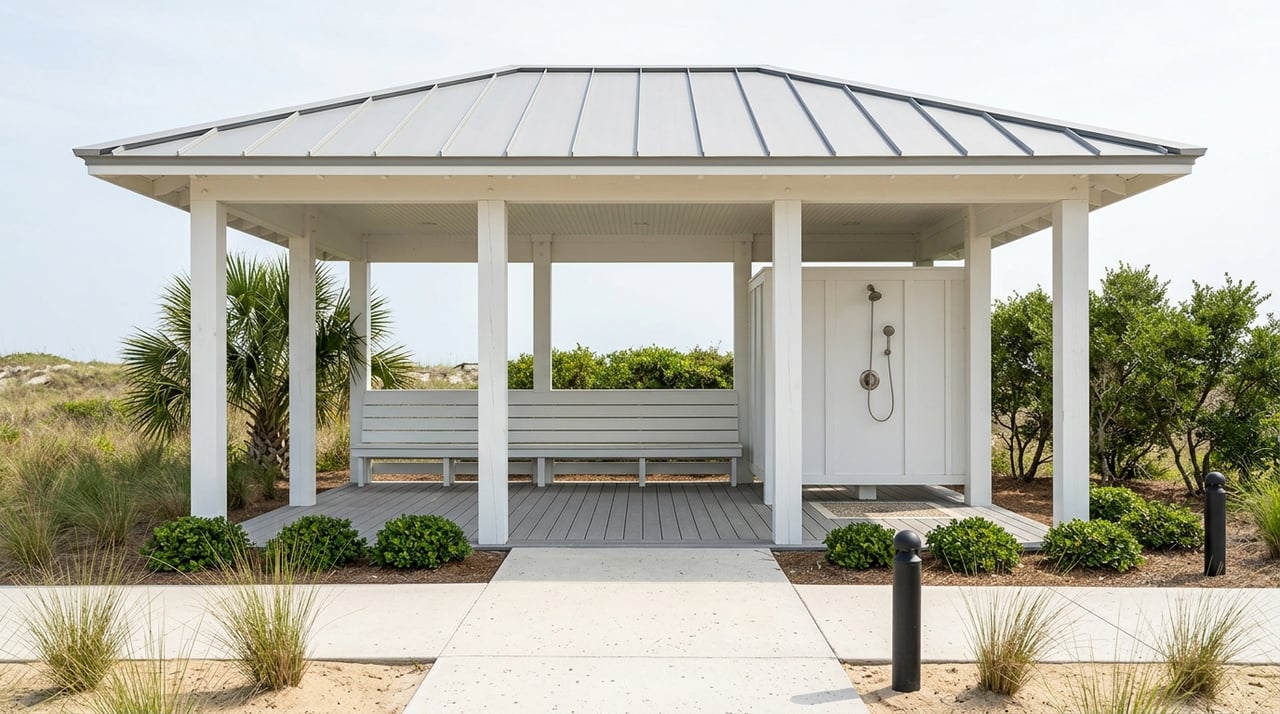
A local example helps show what this can look like. Public materials for Queens Grant describe deeded beach access and, in some cases, boat docks, along with features such as gated entry, a clubhouse, pool, pavilion, playground, private boat ramp, community docks and slips, and private beach access.
That does not mean every association in Topsail Beach offers the same setup. It does show the kind of package some planned coastal communities can create when beach access, boating, and shared maintenance are built into the neighborhood structure.
For some buyers, that setup feels easy and lifestyle-driven. For others, it may feel like a tradeoff if they prefer fewer rules or do not plan to use the amenities enough to justify the dues.
What dues and rules often cover
In North Carolina, associations have broad operating authority. They may adopt and amend rules, adopt budgets and reserves, collect assessments, regulate common elements, charge for use of common elements, and impose late charges, fines, or service suspensions after notice and an opportunity to be heard.
For you as a buyer, the practical question is simple: what are you paying for, and what are you agreeing to follow? Dues may support common-area maintenance, amenities, roads, shared structures, or reserve funding for future repairs.
The North Carolina Department of Justice advises buyers to ask whether a home is in an HOA, to get and read the bylaws and covenants before buying, and to understand the fees fully. It also notes that owners may be charged for common-facility construction or repairs even if they do not personally use those facilities.
Exterior changes usually need approval
One of the biggest differences in association living is exterior control. In a coastal community, that often includes design consistency, maintenance standards, and review of visible changes.
Queens Grant’s architectural review guidelines require prior written approval for exterior changes, including buildings, fences, walls, additions, and exterior paint color changes. Owners are asked to submit plans showing the nature, size, materials, and location of the proposed work so the committee can review how it fits with surrounding structures and topography.
This is important if you are buying with renovation plans in mind. Even simple projects that seem routine elsewhere may need formal review before work starts.
Town rules still apply
Association approval is only one layer. In Topsail Beach, town regulations still matter, and local requirements can take precedence.
Queens Grant’s guidelines state that municipal requirements may still be required and that Topsail Beach regulations take precedence over the association’s guidelines. North Carolina law is consistent with that approach, since local zoning, subdivision, and building regulations still apply to planned communities.
In practical terms, think of this as a two-step process. You may need HOA or POA approval for a project, and you may also need town permits or compliance review.
Why island properties face more regulation
Topsail Beach is not just any coastal town. Its land-use plan explains that local codes and ordinances are tailored to island life and address issues such as dune protection, beach-use equipment, excessive noise, light pollution, and sea turtle protection.
The plan also notes local stormwater requirements, participation in the National Flood Insurance Program, and policies that support dune protection and beach nourishment. Even if a home is not in an association, these local rules still shape what ownership looks like.
That is why a non-HOA property is not automatically a hands-off option. You may gain flexibility from the private covenant side, but you are still buying into a coastal regulatory environment.
Public access versus private access
This is one of the most useful ways to compare communities in Topsail Beach. The town maintains broad public access, but private communities may layer on deeded beach access, docks, parking privileges, ramps, or shared amenities.
If you want quick beach entry, boating convenience, or a more bundled ownership experience, association living may line up with your goals. If you prefer to choose your own routines and rely on the town’s public access network, a non-association property may feel like a better fit.
Neither option is automatically better. The right choice depends on how you use the property, how often you will be here, and how much structure you want around maintenance and design decisions.
Key questions to ask before you buy
Before you make an offer, review the governing documents carefully and ask focused questions. This step can save you from surprises later.
Here are some of the most useful questions for Topsail Beach buyers:
- What do the dues cover?
- Are there common-area, road, dock, or amenity maintenance obligations?
- What financial records are available?
- What exterior changes require prior approval?
- Are there private beach-access, dock, or parking privileges?
- Are there rules about pets, vehicles, storage, or property use in the governing documents?
- Are there separate town permits or local requirements for planned improvements?
North Carolina law requires associations to keep financial and other records reasonably available to owners. Annual income and expense statements and balance sheets must be available within 75 days after the fiscal year closes.
That access to records matters. It gives you a clearer picture of how the association operates and whether the dues and reserve planning appear consistent with the amenities and maintenance responsibilities involved.
HOA community or no HOA?
For many buyers, this decision comes down to control versus flexibility. In an association neighborhood, you often gain shared amenities, common-area upkeep, and a more structured environment, but you also accept dues and private rules.
In a non-association area, you usually avoid that private covenant layer. At the same time, you are still subject to town, county, state, flood, and coastal-use rules, so the difference is not regulation versus no regulation. It is private community oversight versus greater individual discretion within the local rules that already apply.
If you are shopping for a second home, vacation property, or low-maintenance coastal place, an HOA or POA community may be worth a close look. If personal flexibility is higher on your list, you may want to focus on properties outside those communities and compare what you gain and give up.
The best move is to match the neighborhood structure to the way you actually plan to live. If you want help sorting through those tradeoffs in Topsail Beach, Joseph Zuba can help you compare communities, documents, and day-to-day ownership realities with a local perspective.
FAQs
What does HOA or POA usually mean for a Topsail Beach home buyer?
- It usually means the property is part of a planned community with recorded covenants, bylaws, rules, dues, and shared maintenance or amenity obligations that you should review before buying.
What is the difference between a planned community and a condo in North Carolina?
- Under North Carolina law, condominiums are not treated as planned communities for purposes of Chapter 47F, so the recorded declaration and bylaws for the property matter more than the label used in conversation.
What amenities can a Topsail Beach association community include?
- Some communities may include features such as deeded beach access, docks, gated entry, a clubhouse, pool, pavilion, playground, boat ramp, or community slips, depending on the specific neighborhood.
Do Topsail Beach HOA rules replace town regulations?
- No. Town regulations still apply, and local requirements can take precedence, so association approval and town permitting should be treated as separate steps.
What records should you review before buying in a Topsail Beach association?
- You should review the declaration, covenants, bylaws, rules, fee structure, and available financial records, including annual income and expense statements and balance sheets.
Is a non-HOA property in Topsail Beach less regulated?
- It may have fewer private covenant restrictions, but you still need to follow local coastal rules, building requirements, flood-related standards, and other town regulations.
What Topsail Beach town rules should buyers know about when comparing communities?
- Buyers should understand that the town regulates matters such as beach parking, beach access permits, golf carts on town streets, open beach fires, dog use on the beach, and certain beach-driving limits for fishing purposes only.